7 minute read
What to Do With Free Time Instead of Doomscrolling
Opening Reflection
If you are wondering what to do with free time instead of doomscrolling, the answer usually is not 'be more disciplined' in a cold, punishing way. It is often about giving your hands, eyes, and nervous system something gentler to land on. This reflection explores why doomscrolling happens so easily, what it may be doing for you, and a few softer ways to spend free time that still feel real.
Think of it like a cozy side-quest, not a moral test. You are not trying to become a shinier machine. You are just trying to notice where your attention keeps leaking, and build a better little cup beneath it.
Why Doomscrolling Fills the Quiet So Easily
Doomscrolling is sneaky because it can look like rest while quietly scraping the edges of you raw. It asks almost nothing up front. No setup. No materials. No decision bigger than one thumb moving downward again. When your day has already taken a bite out of your focus, that low barrier can feel irresistible.
It can also create the illusion of control. If you keep reading, maybe you will finally understand the mood of the world. Maybe you will catch the next bad thing before it catches you. Maybe you will feel prepared. But often the signal turns to static. You end up full of fragments and light, not nourishment.
That does not mean the habit is stupid. It usually makes a strange kind of sense. Sometimes doomscrolling is a form of avoidance. Sometimes it is a search for stimulation when your brain feels underlit. Sometimes it is how you hover near your own worry without fully naming it. Posts like brain fog, letting things slide, and rest and survival all touch the same seam: when your inner resources are low, the easiest doorway often wins.
There is also the emotional hook. Doomscrolling lets you feel connected and detached at once. You are witnessing, reacting, gathering, but not fully entering your own life. That in-between state can become oddly sticky. The scroll hums. Time blurs. Your evening drifts away. If the feed has made your own surroundings feel far away, Re-Engaging With Reality After Too Much Inner Drift offers a sensory route back.
A gentle shift starts when you stop treating the habit like proof of failure and start treating it like data. What does the scroll give you right before it takes too much? Numbing? Company? Frictionless stimulation? A way to postpone the ache of deciding what you actually want?
What Your Free Time Might Actually Be Asking For
A lot of free time is not truly empty. It carries residue. Maybe you are overstimulated. Maybe you are lonely. Maybe your body is tired but your mind is still pacing in circles like a cat at 3 a.m. If you only ask, 'What should I do instead of doomscrolling?' you may miss the deeper question underneath: 'What kind of care would actually meet me here?' If the residue feels more like being stuck between chapters, When Life Feels on Pause meets that state without turning it into another demand.
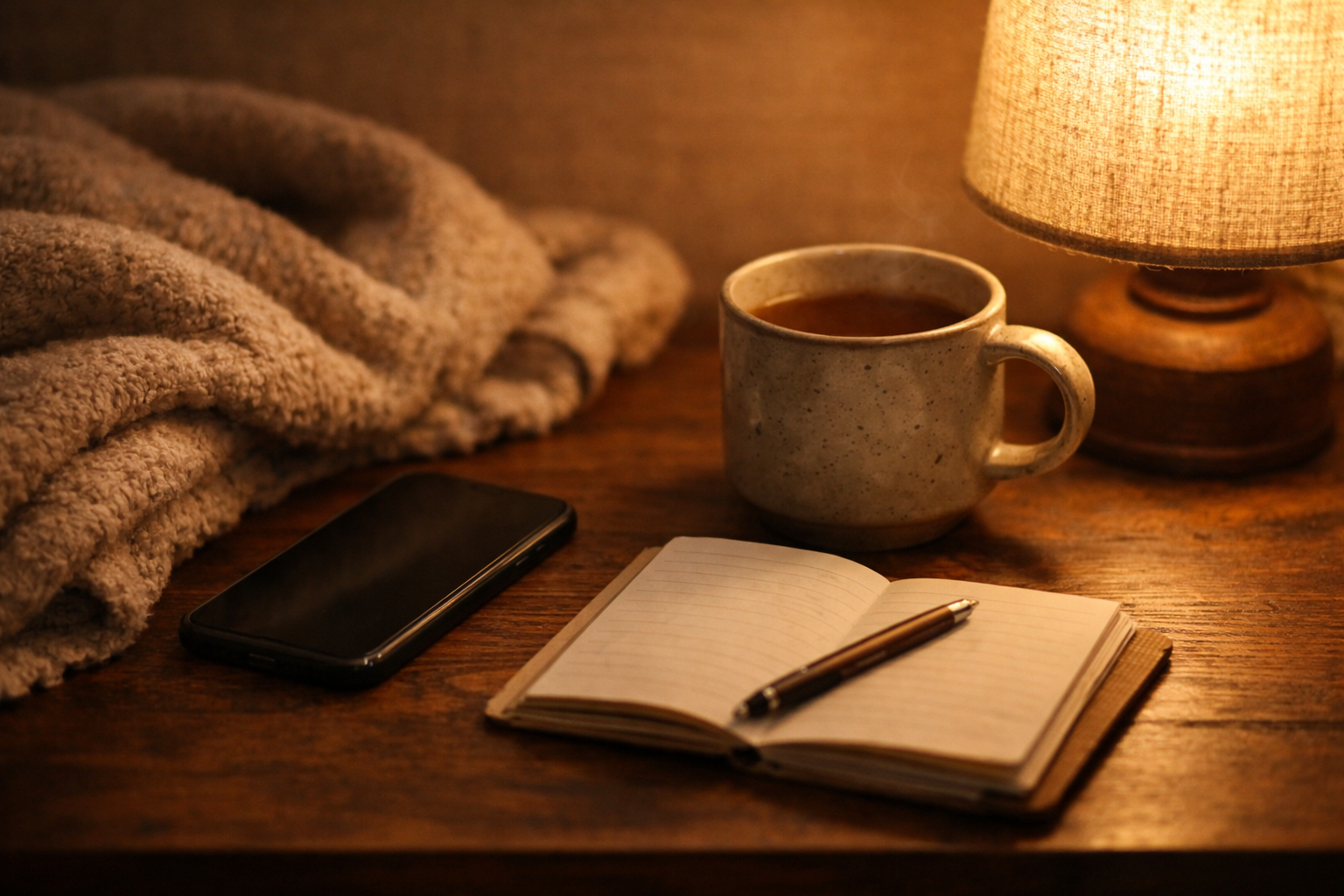
Sometimes the answer is not productivity at all. Sometimes your free time is asking for quiet permission. Sometimes it wants gentle attention. Sometimes it wants a tiny ritual of re-entry, like putting your phone in another room and making tea without also trying to optimize your future.
There are seasons when you do not need a grand hobby or a cinematic evening routine. You need activities with a low activation cost and a decent emotional return. Something simple enough to begin before your resistance wakes up. This is why smallest acts matters. Tiny things count. Lighting a lamp. Watering a plant. Tidying one surface. Opening a journal and writing three resentful little sentences. These are not glamorous, but they help your attention leave the infinite hallway of the feed and come back into a room with walls.
Other times, free time is asking for meaning. Not in a giant life-purpose way. More like a small thread you can follow. A game. A craft. A recipe. A page in a book. A walk where you look for one interesting texture. The point is not to become the world's most enlightened person by 8:45 p.m. The point is to feel yourself existing somewhere tangible again.
It may help to think of free time in categories instead of one big impossible question. You might need comfort, release, novelty, or presence. Comfort could be tea and a blanket. Release could be stretching or muttering into a notebook. Novelty could be trying a new cozy game or recipe. Presence could be journaling, mindful breathing, or simply noticing the shape of the evening light.
When you know what your system is actually asking for, it becomes easier to choose something better than the scroll without making the choice feel like punishment.
Small Things to Do Instead of Doomscrolling
Here are a few gentle things to do with free time instead of doomscrolling. Not because they are morally superior, but because they are more likely to leave you feeling like a person and not a scraped-out tab left open too long.
If you need comfort
- Make a warm drink and hold it with both hands for one full minute.
- Revisit tiny gratitude rituals and list three things that made the day less awful.
- Sit somewhere soft and read two pages of anything, even if that is all you manage.
If you need motion
- Put on one song and tidy only for the length of that song.
- Stretch your shoulders, jaw, and hands.
- Walk to the window or step outside and look at something farther away than your screen.
If you need expression
- Open a note and write an unfiltered little weather report for your mind.
- Draw shapes, color blocks, or absolute nonsense.
- Try present-moment journaling when your thoughts feel too slippery to hold.
If you need play
- Spend twenty minutes with a cozy game.
- Rearrange a shelf, a desktop background, or a corner of a room just for the vibe.
- Make a tiny playlist for the mood you wish the evening had.
If you need grounding
- Try grounding practices or meditation in the lightest possible way. One breath still counts.
- Touch something real: a mug, a blanket, a cool counter, a pet's fur, your own sweater sleeve.
- Put the phone on charge in another room and let the world be slightly less reachable for half an hour.
For a bit of outside context, the idea of attention as a limited resource is useful here. The overview on attention is a simple starting point if you want a non-mystical frame for why certain activities leave you clearer than others.
You do not need a perfect anti-doomscrolling routine. Usually one or two fallback options is enough. A short list. A few safe doors. The less dramatic the replacement, the more likely it is to actually happen.
And if some nights you still scroll? Fine. The goal is not purity. The goal is to widen the path back to yourself so it is easier to find in the dark.
Journaling Prompts
Use these softly. You are not interrogating yourself. Just listening for a signal under the static.
- What do I usually hope doomscrolling will give me in the moment?
- How do I actually feel after twenty minutes of scrolling compared with twenty minutes of something gentler?
- What activities feel low-pressure enough that I might realistically do them on an ordinary tired evening?
- When my free time disappears into my phone, what feeling was waiting for me underneath?
- What would make my evenings feel a little more like mine again?
Closing Reflection
There are many things to do with free time instead of doomscrolling, but the truest ones are usually the ones that meet your real state with honesty. Not every evening is for becoming more productive, more spiritual, or more impressive. Some evenings are just for returning. A small act. A softer texture. A choice that leaves a little more of you intact.
Come back to this gently. You can pair it with returning to quiet projects with gentle hands if you want another path back into presence without pressure. Over time, those small replacements start to change the feel of your free time. Not all at once. Just enough to break the spell of the endless scroll and let your own life make a sound again.